
Bed bugs are persistent pests that can be difficult to detect and eliminate without a thorough treatment strategy. They hide in small cracks and crevices around beds, furniture and other resting areas and can be transported between locations in luggage, furniture and personal belongings.
NorthPoint Pest Management provides professional bed bug inspection and treatment for homes, apartments, multi-unit properties and businesses in Edmonton and surrounding communities.
Our approach combines detailed inspection, customer preparation, targeted treatment and follow-up to address the infestation while minimizing unnecessary pesticide exposure.
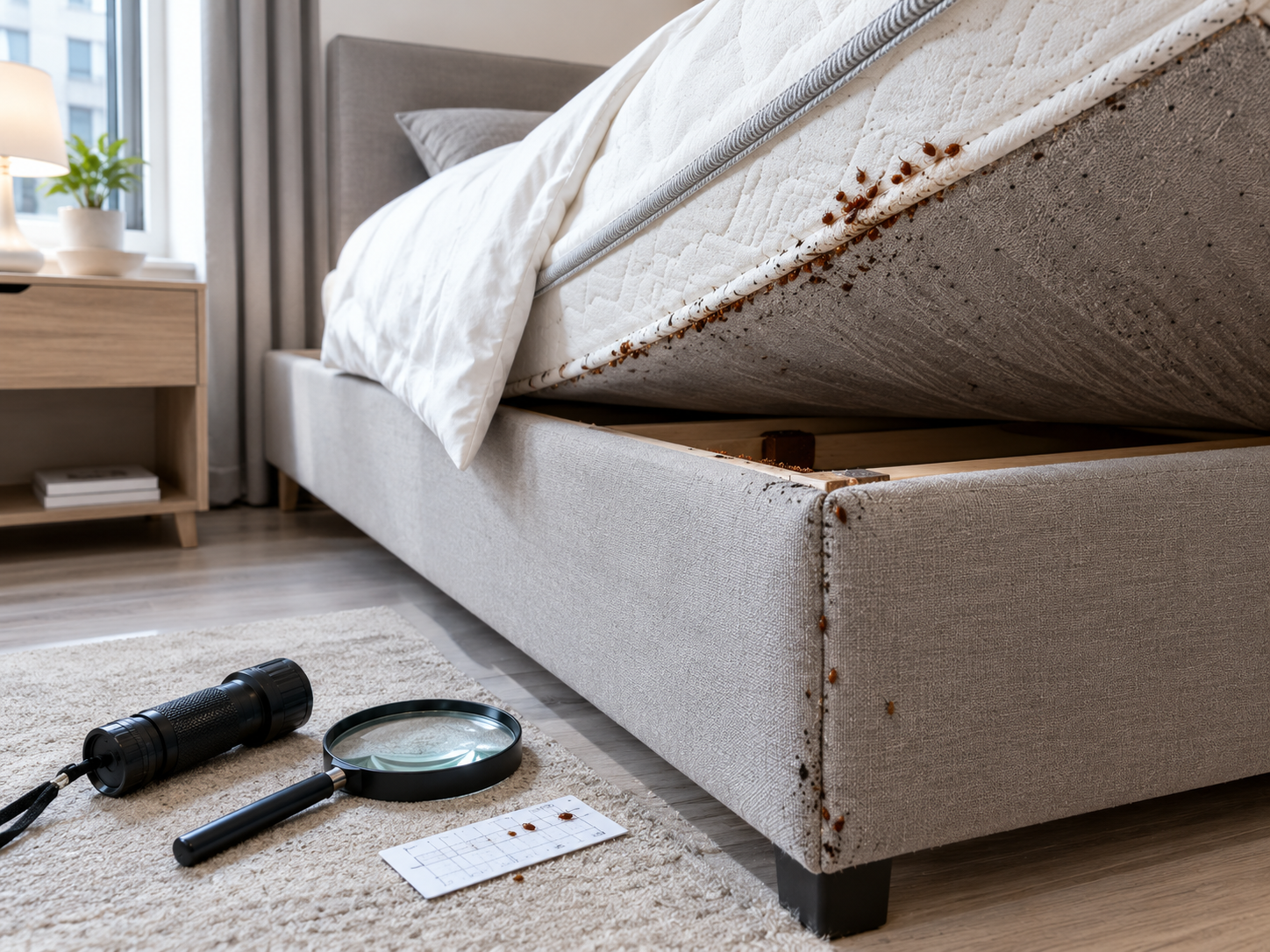
Bed bugs are small, flat insects that hide in protected areas close to where people sleep or rest. Common harbourage areas include mattresses, box springs, bed frames, headboards, upholstered furniture, baseboards and cracks or crevices around sleeping areas.
Because bed bugs can remain hidden and may be transported between locations in luggage, furniture and other belongings, successful control requires more than treating the bugs that are immediately visible.
NorthPoint uses an Integrated Pest Management (IPM) approach that may combine inspection and monitoring, preparation, physical control methods, targeted pesticide applications where appropriate, and follow-up evaluation.
The treatment plan is based on the extent and location of activity, property type and other conditions identified during the inspection.
Bed bugs usually remain hidden during the day and become active when people are resting. Because they are excellent at hiding, physical evidence is often more reliable than relying on bites alone.
Signs that may indicate bed bug activity include:
Skin reactions vary considerably between individuals. Some people develop visible marks after being bitten, while others may show delayed reactions or no visible reaction at all.
Other insects and skin conditions can also produce marks resembling bed-bug bites.
A proper inspection and physical evidence are therefore much more reliable for confirming a bed-bug infestation.
Bed bugs tend to remain close to locations where people sleep or spend extended periods resting, particularly during the early stages of an infestation.
Common harbourage areas include:
As an infestation becomes more established, bed bugs may spread farther from the original sleeping or resting area.
In apartments and other multi-unit buildings, bed bugs may move between connected units through cracks, crevices and utility pathways.
Where appropriate, units beside, above and below an infested unit may need to be inspected or monitored to determine whether activity has spread.
That last paragraph comes directly from the philosophy of your Alberta structural training and is particularly valuable for your target property-management market.
We inspect sleeping and resting areas and other potential harbourage locations for live bed bugs, fecal spotting, shed skins, eggs and other evidence of activity.
The inspection helps determine:
Successful treatment requires cooperation between the pest-management professional and the occupants.
NorthPoint provides treatment-specific preparation instructions that may include:
Following any temporary-vacating and re-entry instructions associated with the selected treatment
Bed bugs can be difficult to eliminate, and no single treatment method is appropriate for every infestation.
Depending on the inspection findings, the treatment program may include a combination of:
Any pesticide used by NorthPoint is selected for the specific pest and application site and applied according to its registered Canadian label.
Bed bug control frequently requires more than one treatment or inspection.
NorthPoint follows up as required to assess remaining activity, evaluate treatment effectiveness and determine whether additional treatment or monitoring is necessary.
The timing of follow-up service depends on the treatment method, product label and conditions found at the property.
We look for physical evidence of bed bugs and identify harbourage areas before developing the treatment strategy.
Bed bugs often require more than one control method. Our approach can combine physical controls, monitoring and targeted pesticide applications based on the conditions found during inspection.
We provide treatment-specific instructions so occupants understand how to prepare the property and what to expect before, during and after treatment.
Bed bug management does not necessarily end after the first treatment. We evaluate treatment results and determine whether additional service or monitoring is required.
Bed bugs can spread between connected units. For apartments and multi-unit properties, we can work with property managers to support coordinated inspection, treatment, resident preparation and follow-up.
Bed bugs can affect clean or cluttered properties alike. Prevention focuses primarily on reducing opportunities for bed bugs to be introduced and detecting activity early.
Bed bugs are not an indication of poor housekeeping. Early detection and prompt action are among the most important ways to limit their spread.
Preparation requirements vary depending on the treatment method and the conditions found during inspection.
General preparation may include:
NorthPoint will provide specific preparation, temporary-vacating and re-entry instructions applicable to the treatment being performed.
Bed bugs can be particularly challenging in apartments and multi-unit residential buildings because occupants and belongings move frequently and bed bugs may spread through cracks, crevices and utility pathways.
NorthPoint can support property managers with:
When bed bugs are confirmed in a multi-unit property, coordinated action can help determine whether the infestation is limited to one unit or has spread to adjoining areas.
Early reporting, resident cooperation and coordinated management are critical to limiting the spread of bed bugs in multi-unit properties.
Bed bugs can be difficult to identify and may spread before an infestation becomes obvious. A professional inspection can help determine whether bed bugs are present, where activity is concentrated and what treatment approach is appropriate.
NorthPoint Pest Management provides professional bed bug inspection and treatment for homes, apartments, multi-unit properties and businesses throughout Edmonton and surrounding communities.

Professional residential and commercial pest management solutions serving Edmonton and surrounding Alberta communities.
Protect your home from cockroaches, ants, rodents, bed bugs, and more with professional Integrated Pest Management and targeted control treatments.
WhatsApp us