
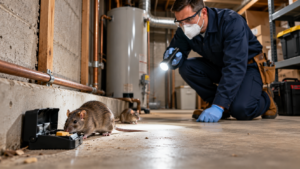
Mice are more than an unpleasant surprise. They can contaminate food, damage stored goods and insulation, gnaw building materials and electrical wiring, and contaminate occupied areas with urine and droppings.
In Edmonton and throughout Alberta, effective mouse control requires more than simply placing traps or bait. The long-term objective is to determine how rodents are entering the building and what is allowing them to remain there.
The house mouse is the rodent most commonly associated with occupied buildings. It is small, adaptable and capable of living very close to people.
House mice can enter through remarkably small openings, which is why gaps around doors, utility penetrations, foundations and other building-envelope openings deserve careful inspection.
Other mouse species can also occasionally enter structures, particularly buildings near natural or undeveloped areas.
Alberta is different from most jurisdictions in North America.
The province maintains a long-standing rat-control program and has no established resident population of Norway or roof rats. Occasional rats can arrive in Alberta through vehicles, freight or other means, but confirmed occurrences are investigated and eradicated.
If you believe you have seen a rat in Alberta, safely take a photograph if possible, note the location and report the sighting to Alberta’s Rat Control Program or the appropriate local authority.
Common signs include:
Catching individual mice can reduce activity, but it does not necessarily address the reason they entered the building.
A continuing infestation can be supported by:
Without correcting these contributing conditions, new mice may continue entering even after existing mice have been removed.
NorthPoint follows an Integrated Pest Management approach:
Where rodenticides are appropriate, they are used according to the registered product label and applicable Alberta requirements. Tamper-resistant bait stations may be used where required to reduce access by children, pets and other non-target animals.
Avoid sweeping or vacuuming dry rodent droppings, nesting material or contaminated dust. Disturbing dry material can place contaminated particles into the air.
Where significant rodent contamination is present, appropriate wet-cleaning, disinfection and personal protective procedures should be followed.
Finding the entry point is often as important as catching the mouse. NorthPoint combines control with exclusion and monitoring to reduce the likelihood of the problem returning.
Contact NorthPoint for a rodent inspection before a small problem becomes a big one.

Professional residential and commercial pest management solutions serving Edmonton and surrounding Alberta communities.
Protect your home from cockroaches, ants, rodents, bed bugs, and more with professional Integrated Pest Management and targeted control treatments.
WhatsApp us