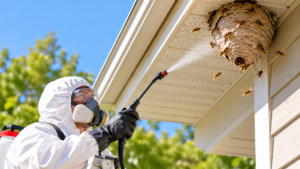

Wasps and hornets are beneficial predators and form an important part of the ecosystem. They become a pest-management concern when nests are established where people are likely to encounter or disturb them.
Social wasps can defend their nests aggressively, and unlike honeybees, wasps are capable of stinging repeatedly. For someone with a serious sting allergy, an encounter can become a medical emergency.
Paper wasps
Paper wasps construct exposed, open-celled paper nests, often beneath eaves, decks, railings and other protected surfaces. Their colonies are generally smaller than those of yellowjackets.
Yellowjackets
Yellowjackets are social wasps that may establish nests underground, inside wall voids, in structural cavities, wood piles or other protected areas. Colonies can become large later in the season.
Bald-faced hornets
Bald-faced hornets are black and white social wasps that construct distinctive enclosed paper nests, often in trees, shrubs or on structures.
Honeybees and bumblebees
Bees should not automatically be treated as wasps. Correct identification is important because bees are valuable pollinators and management options can differ.
Potential nesting locations include:
Repeated wasp traffic entering and leaving the same opening is often a strong indication that a nest is nearby.
One particularly important rule applies to nests located inside walls or other structural voids: Do not seal the exterior entrance while wasps are still active inside.
Blocking an active entrance can cause the insects to search for another route out of the void, potentially directing them into the occupied interior of the building.
The Alberta Structural Manual specifically teaches that a wasp or hornet entrance should not be sealed until activity has been eliminated. This is an excellent point from your training to include because it gives the article genuine technical value.
How NorthPoint Manages Wasp and Hornet Problems
Treatment depends on the insect species, nest location, construction of the building and level of activity.
Our approach includes:
For nests inside structural voids, treatment may involve applying an appropriately labelled product to the nest area or access route. The opening should only be sealed after activity has ceased.
Health Canada similarly recommends professional assistance for active nests where removal presents a risk and notes that treatment in the evening can reduce exposure because wasps are generally less active then.
If a nest is near an entrance, children’s play area, occupied deck or another frequently used location, avoid approaching or disturbing it and arrange for proper identification and treatment.
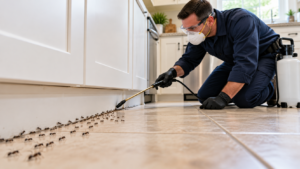
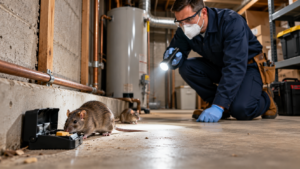
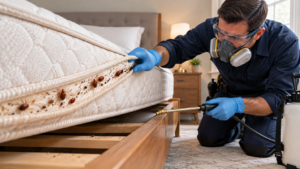
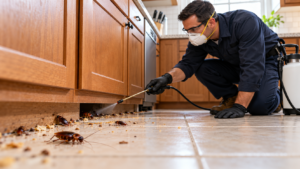
Keep your distance and call NorthPoint for safe, professional removal.

Professional residential and commercial pest management solutions serving Edmonton and surrounding Alberta communities.
Protect your home from cockroaches, ants, rodents, bed bugs, and more with professional Integrated Pest Management and targeted control treatments.
WhatsApp us